

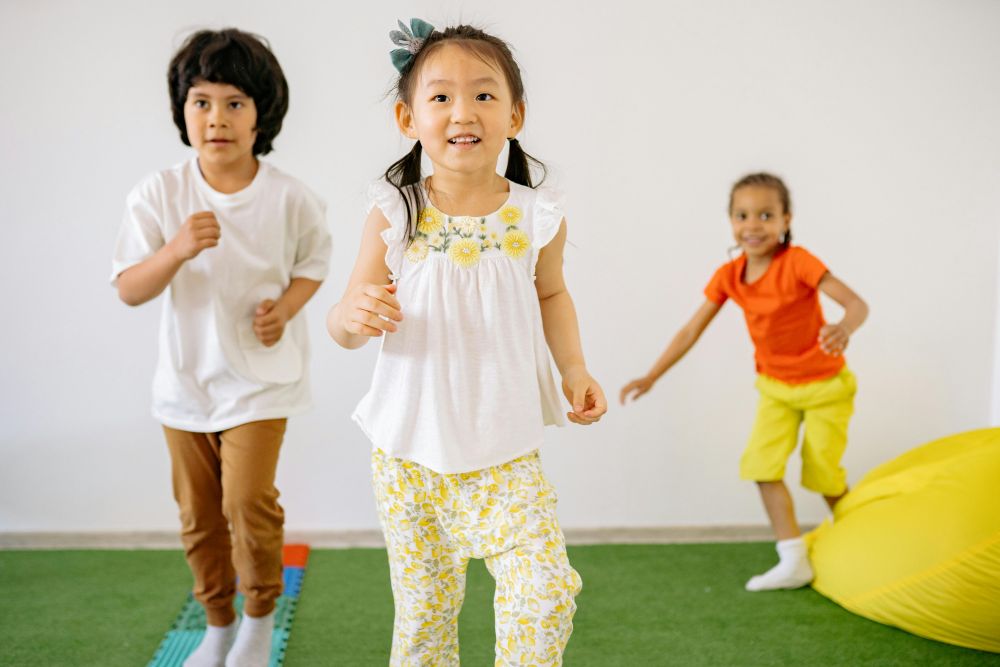
While some classrooms lean on visual repetition, early childhood development thrives through a more integrated approach, such as multisensory instruction. This teaching methodology engages sight, sound, touch, and movement simultaneously to facilitate learning.
By connecting these various sensory inputs, preschoolers build mental associations and grasp complex concepts. Also, this active way of learning not only helps children acquire new skills but also shapes how they understand the world.
The Limitations of Visual-Only Learning
Relying heavily on visual aids like flashcards often only supports one type of learner. For many children, particularly those who are kinesthetic or auditory learners, information presented solely through sight is often forgotten.
While memorisation offers a temporary fix, mastery occurs when multiple neural pathways are activated at once.
At Hess Preschool, we utilise a structured multisensory teaching approach to help children move beyond simple repetition. To build a more comprehensive and lasting foundation, we allow them to engage with new concepts through every sense.
What is Multisensory Teaching?
Multisensory teaching incorporates more than one sense during instruction to make learning stick. This follows the VAKT model (Visual, Auditory, Kinesthetic, and Tactile), ensuring information is accessible to every child.
By activating these various channels, comprehension and recall improve significantly.
The multisensory teaching approach aligns with our focus on teacher-guided exploration and active learning. In our classrooms, children are encouraged to make discoveries and discuss their experiences through purposeful, hands-on activities.
What are Some Examples of Multisensory Instruction?
While the activities at Hess Preschool can be engaging, it’s important to note that multisensory learning is not just “fun and games.” Instead, it is a structured, intentional methodology designed to support how children naturally process information.
By using multisensory instruction for reading, writing, numeracy, and other subjects, we can help ensure that core concepts are accessible to every child.
1. Literacy (Phonics and Writing)
Our Jolly Phonics programme provides a strong foundation for diverse learners.
For example, when teaching a concept such as the letter ‘S’ sound, we engage several senses simultaneously to help children connect the letter’s shape to its corresponding sound:
- Visual: Children observe the printed letter ‘S’ in various contexts, such as on flashcards or within a storybook.
- Auditory: Students hear the distinct “ssss” sound as the educator models the pronunciation clearly.
- Kinesthetic/Tactile: To reinforce the physical shape, children might trace the letter ‘S’ with sensory materials such as sand or shaving foam. Alternatively, they may use their finger to trace the letter in the air while simultaneously making the sound, creating a physical and mental link.
2. Numeracy (Counting and Recognition)
The multisensory approach also underpins our CPA (Concrete, Pictorial, Abstract) math methodology, which is designed to make abstract numerical concepts feel tangible and real. By engaging multiple senses, we help children transition more easily from physical objects to mental representations.
For instance, when exploring the number “4,” we might implement the following strategies:
- Tactile: Children handle and feel four physical counters, such as blocks or beads, to understand quantity through touch.
- Auditory: Students hear themselves and their peers count “one, two, three, four” aloud, reinforcing the sequential order of numbers.
- Visual: Children see the written numeral “4” displayed prominently, associating the symbol with the physical objects they have handled.
- Kinesthetic: To internalise the value, children move their bodies by taking four large steps or jumping four times.
3. Language Acquisition
Our early preschool, nursery, and kindergarten curricula use rich, movement-based activities to ensure immersive language acquisition, which often goes far beyond simple flashcard association. By creating a multisensory approach to new vocabulary, we help children form stronger associations with the words they are learning in both English and Chinese.
When learning a verb like “run,” for instance, our multisensory teaching approach engages the child’s entire body:
- Auditory: Children hear the word spoken clearly by the teacher and repeat it themselves to practise the correct pronunciation and rhythm.
- Visual: Students see the written word or the corresponding character, allowing them to associate the visual symbol with the action.
- Kinesthetic: Children physically run across the room or on the spot. By performing the action while repeating the word, they create a physical memory of the vocabulary.
Multisensory Learning at Hess Preschool
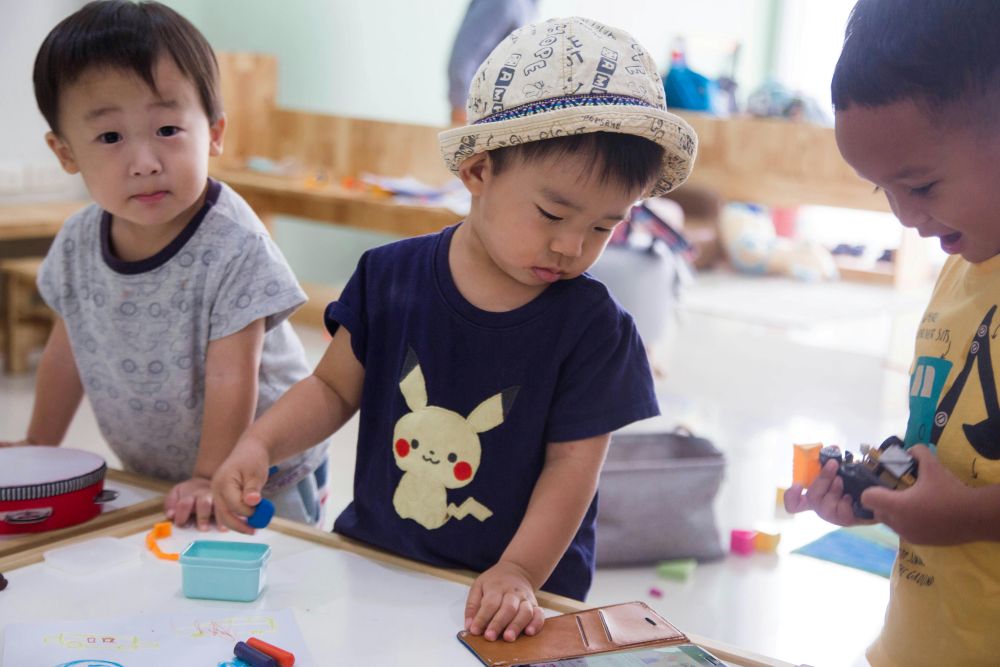
Our dedication to multisensory instruction is evident across all our learning pillars, providing every child the opportunity to engage with the curriculum in a way that suits their learning styles.
By integrating these techniques into daily life, we create an environment where discovery is constant:
STEAM Education and Hands-On Discovery
STEAM education in our preschool is inherently multisensory. When children engage in a science experiment or thematic playgroups, they are constantly using their hands to explore, their eyes to observe, and their ears to listen and hypothesise.
By taking this approach, fundamental principles, such as buoyancy or gravity, can be experienced rather than just told. Through projects and “Show and Tell” sessions, students can also refine their understanding by physically manipulating materials and articulating their findings, transforming abstract theories into concrete experiences.
Multisensory Strategies for Development
We utilise specific multisensory teaching strategies to support both social-emotional growth and executive function. During dramatic play or shared building projects, children use tactile and kinesthetic skills to collaborate, thereby improving communication and conflict resolution.
Simultaneously, activities that require sorting, sequencing, and manipulating objects, such as organising a complex building station, enhance focus and organisation. These are key elements of school readiness that help children manage their time and tasks more effectively.
By engaging multiple senses in these social and cognitive exercises, we provide a holistic framework that supports the development of the “whole child” and prepares them for the social and academic transitions ahead.
Personalised Multisensory Instruction
Effective multisensory instruction requires thorough planning and consistent observation. Our low teacher-child ratio allows our educators to identify each child’s specific learning preferences, whether they are primarily visual, auditory, or kinesthetic. This enables us to personalise the multisensory input for maximum benefit, ensuring no child is left behind.
Also, our focus on teacher-guided exploration and hands-on learning makes the experience both engaging and purposeful.
At our preschool, we believe that when a multisensory teaching approach is tailored to each individual, it fosters confidence and autonomy. This active-learning focus helps children remain at the centre of their own educational journey.
A Holistic Foundation for Future Success
Multisensory instruction is a research-backed approach that engages the entire mind and body, helping children develop the mastery and adaptability required for the rigours of primary school.
Rather than settling for surface-level drills, choosing a supportive educational environment can help your child remain curious and confident.
If you’re looking for a preschool on the East Coast that follows a multisensory teaching approach, consider Hess Preschool. Book a school tour today to see how we make learning fun and engaging for preschoolers.